What it does
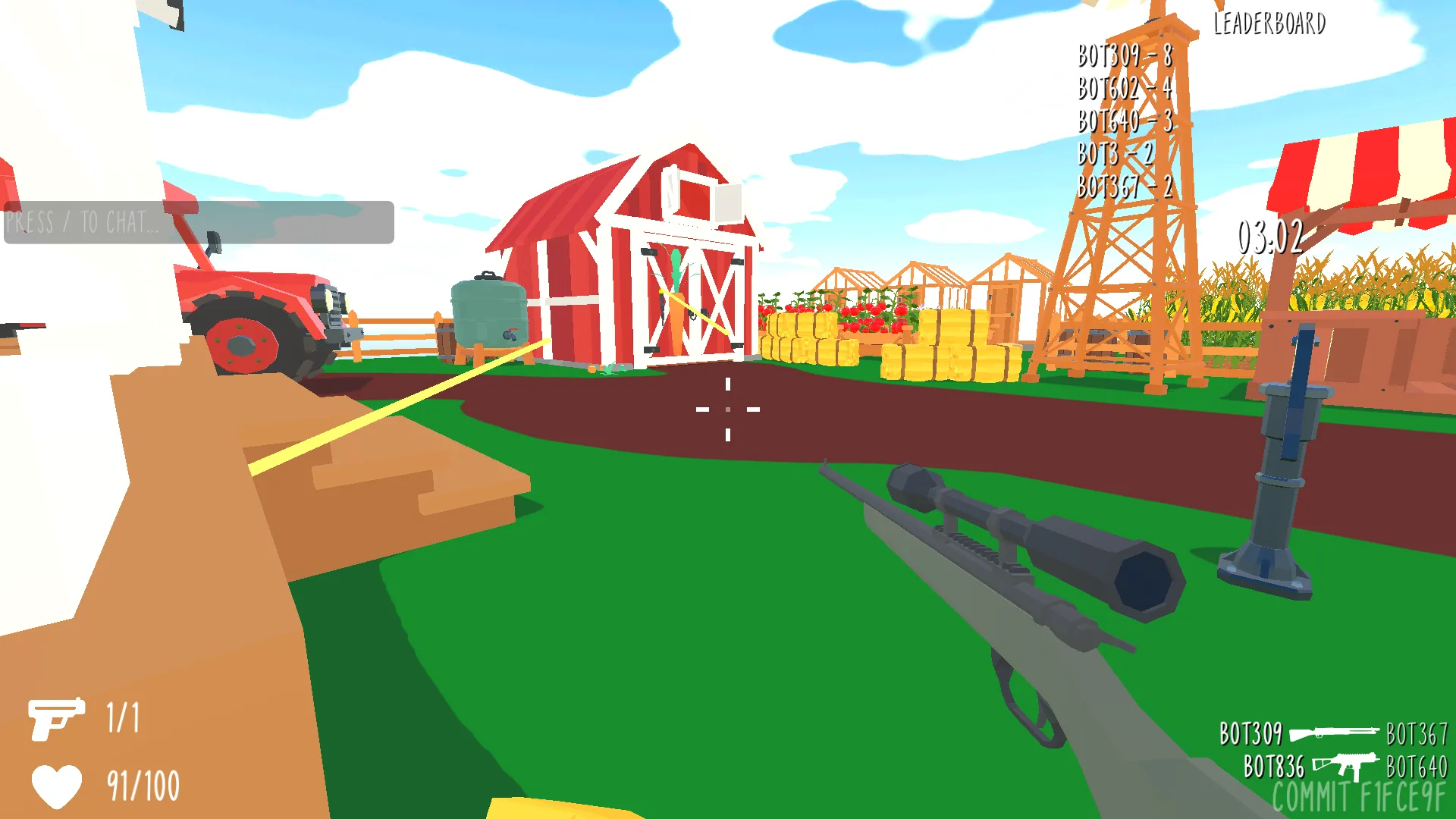
A player clicks Find Game. The Go matchmaker places them in a match on a nearby game server and keeps track of live servers and matches. A server manager on each game server starts one headless Godot process per match and reports back to the matchmaker every ten seconds.
What I did
I lead a small team on the whole project. We hand-wrote the game itself in GDScript. It is server-authoritative: one Godot project builds both the browser client and a headless dedicated server. The server decides everything that matters, such as who got hit, health, ammo, kills, and the match clock. Clients mostly send requests and draw the results.
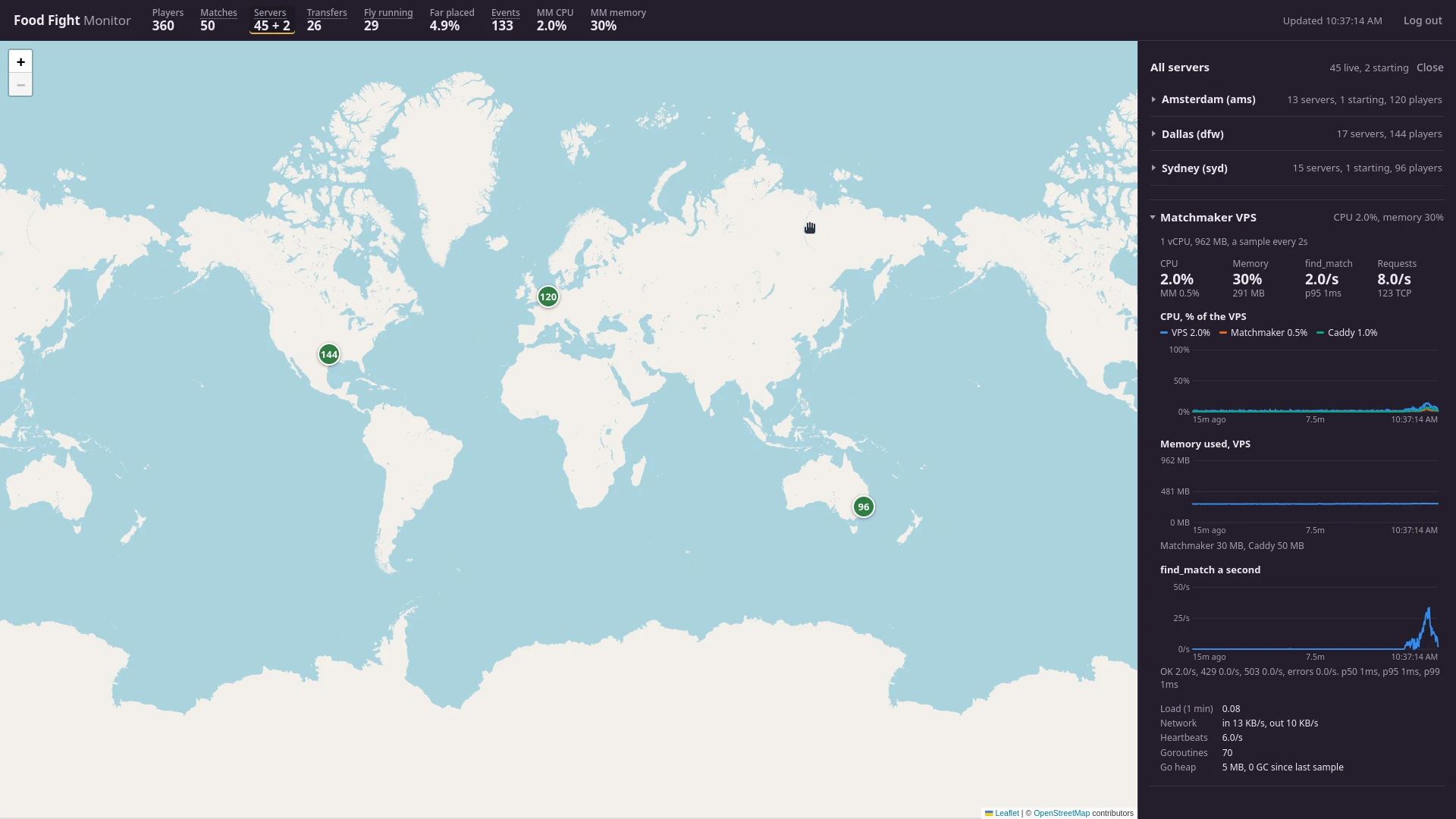
I built the orchestration system that runs online play. I designed and tested the Go matchmaker and server manager, and agents wrote most of their implementation. I reviewed their behavior against tests and dashboard readings and decided when changes were ready.
One decision
Don't make players wait for a server to boot. A new Vultr game server takes time to start: a median of 78 seconds in the eight-hour test. A stopped Fly.io Machine starts in about two seconds. So instead of holding players, the matchmaker starts their match on Fly.io and moves it to the Vultr server between rounds once that server is up.
Evidence
An eight-hour synthetic load test on November 27, 2026 kept about 400 simulated players online at once, connecting from six regions on four continents.
- Player sessions
- 18,639
- Players refused
- 0
- Time to connect, p95
- 1.2 s
21 Fly.io Machines carried 121 players while Vultr servers booted. All 121 moved to Vultr with zero lost connections.
Simulated players connect, join, and answer ping checks, but they do not play. So the test measures matchmaking, hosting, and scaling, not game server load from real play. These are test results, not production traffic. The game is not yet released, and its source is private for now.